







 March 9, 2026
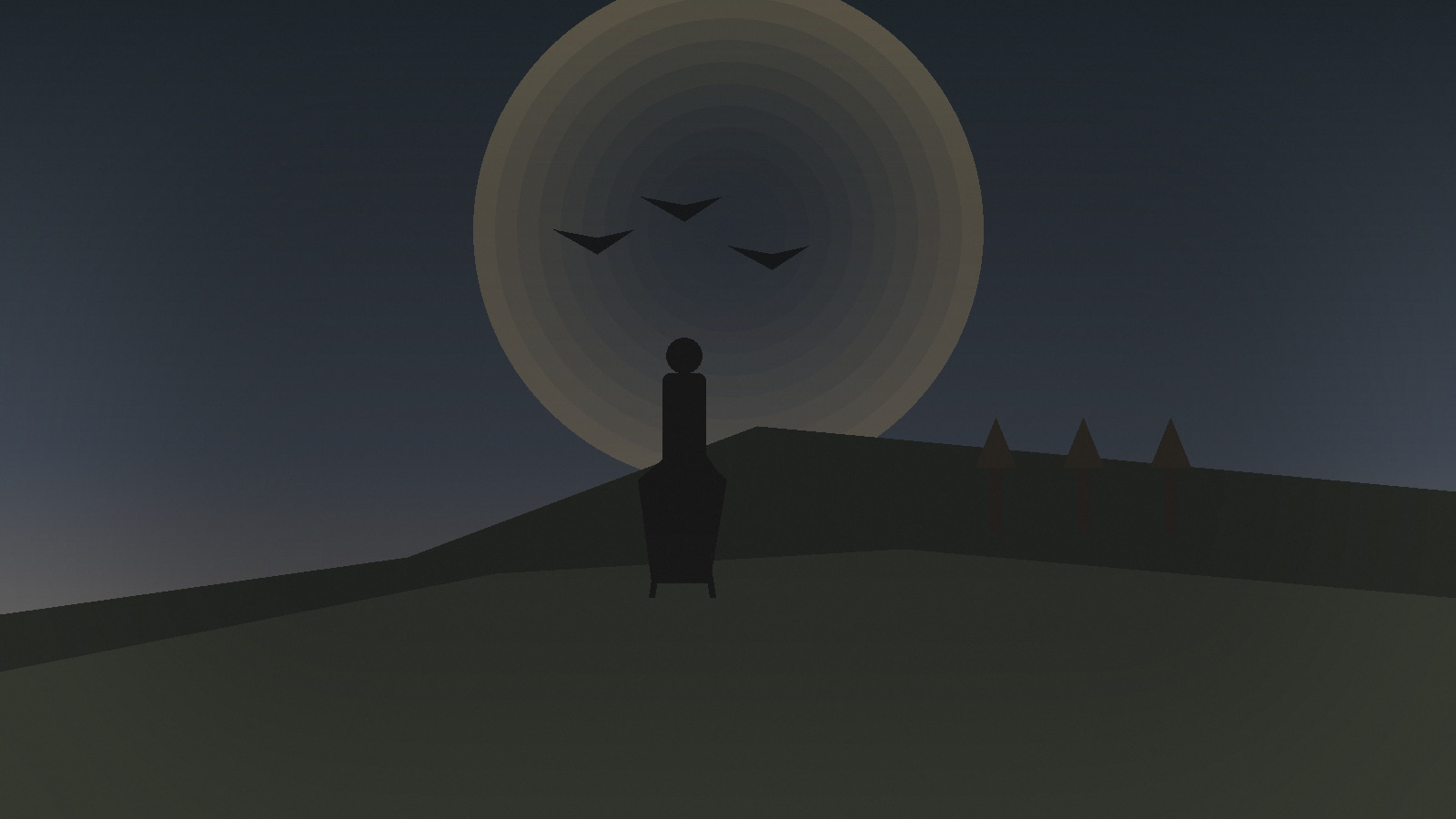
Every autumn the village of Blackwater leaves an offering for the witch on the hill, until a miller’s daughter climbs the path herself and learns the curse was never what the town believed.
Fantasy · 9 min read
In Blackwater, no one spoke the witch’s name above a whisper.
They spoke instead of the things she took.
Milk spoiled overnight if the cows were left unblessed. The river climbed its banks in spring and ruined three gardens out of every ten. Children woke sweating with fever. Men who walked drunk through the marsh after dark sometimes did not walk back. Every bad season, every rotting beam, every hardship too ordinary to bear without dressing it in myth—the witch got the blame.
So each autumn, on the first night of frost, the village climbed halfway up Blackwater Hill and left an offering at the stone marker where the grass turned black.
A loaf of bread.
A bowl of cream.
A length of red ribbon.
Once, when the winter had been especially cruel, a silver christening cup stolen from the chapel and returned before dawn with the metal warped soft as wax.
No one went farther than the marker.
No one knocked at the cottage at the top.
No one looked too long at the one narrow window that sometimes held a candle against the dark.
Except Elara Thorne.
Elara was twenty-one, the miller’s daughter, and had the kind of face that made old women say fate would notice her if she wasn’t careful. She had her father’s stubborn mouth and her mother’s inconvenient habit of wanting truth more than comfort. In Blackwater that was practically a character flaw.
The year she decided to climb the hill, her younger brother Tom fell sick.
It began with a cough and became, within four days, a fever that burned through him like a hidden fire. By the seventh day he no longer knew their names. By the ninth, the doctor from Fenmere had stood at the foot of Tom’s bed with exhausted eyes and said there was nothing left to do but keep him cool and pray for mercy.
Her father took that news like men in small villages often do—by reaching for the nearest old superstition and calling it wisdom.
“It’s the hill,” he said that night, staring into the kitchen hearth as if answers might crawl out of the coals. “We were late with the offering this year. Everyone said so. The witch has taken notice.”
Elara, who had not slept properly in days, said, “Tom has a fever, not a feud with folklore.”
Her father’s face hardened. Grief made him look larger and stupider at once. “Mind your tongue.”
Her mother, pale with worry, whispered, “Enough.”
But later, when the house had gone quiet except for Tom’s ragged breathing overhead, Elara found her father wrapping bread and ribbon in a clean cloth.
“You cannot be serious,” she said.
“He’s my son.”
“And if the bread fails, what then? Will you throw the mill after it? Me?”
He would not meet her eyes. That scared her more than anger would have.
In Blackwater there were old stories beneath the old stories. Everyone knew, though no one said it plainly, that once in a great while the hill asked for more than cream and ribbon.
A goat in the bad lambing year.
A wedding ring in the flood year.
A firstborn promise whispered where no priest could hear.
And long ago—far enough back for men to lie comfortably about it—a girl.
Elara stepped between her father and the door. “You are not feeding Tom’s life to a story because this village is too cowardly to bury its own bad luck.”
He flinched then, not because she was wrong but because she had said it out loud.
“Move,” he said.
“No.”
For one sharp, ugly moment she thought he might shove her.
Instead he sat down hard at the table and covered his face with both hands. When he spoke again, his voice was small. “Then what would you have me do?”
That question ruined her anger.
Because underneath the superstition was only a father being asked to watch his son die.
Elara picked up the wrapped offering. “I’ll go.”
Her mother, from the stairs, said, “No.”
Elara turned. She had not heard her there.
“You don’t even believe in the witch,” her mother whispered.
“Exactly.” Elara tucked the bundle under her arm. “That makes me the least likely person to start bargaining with her.”
Outside, Blackwater lay under a hard white moon. The marsh shimmered beyond the houses like something half awake. Reeds hissed in the wind. Up on the hill, the cottage window burned with a single amber light.
Elara had seen it all her life.
Tonight she climbed toward it.
The path was steeper than it looked from below. Hawthorn snagged at her skirt. The grass underfoot was slick and cold, silvered with frost. When she passed the stone marker—the farthest any villager willingly went—the air seemed to change. Not colder exactly. Closer.
As if the hill had been listening and was pleased someone finally had the nerve to continue.
The cottage stood near the summit, small and dark-roofed, built from stone older than the chapel. Its garden was not the tangle Elara had expected but a careful grid of bitter herbs, black cabbages, and bare medicinal stalks tied in bundles to dry. Charms of bone and rowan hung from the eaves, but so did rabbit snares, copper pans, and ordinary laundry.
That irritated her more than anything. There was no grandeur to it. No theatrical evil. Just a house.
She knocked.
A voice from inside said, “If that’s another loaf of apology bread, leave it for the crows.”
Elara blinked.
Then the door opened.
The witch was younger than the stories allowed.
Not young, exactly. Perhaps forty. Perhaps older in the way old trees are—hard to date, impossible to dismiss. Her hair was black streaked with iron-grey, braided over one shoulder. One side of her face was beautiful in a stern, sharp-boned way; the other was marked by old burn scars running from temple to jaw. Her eyes were the flat dark color of peat water.
She took in Elara, the offering bundle, and the fact that Elara had climbed past the marker.
“Well,” she said. “Either the village has finally grown a spine, or you’ve got nowhere else to be.”
“My brother is dying.”
The witch leaned one shoulder against the doorframe. “That would be the nowhere else, then.”
Elara held out the bundle. “If this is your doing, stop it.”
A laugh escaped the woman—short, dry, and not especially kind. “Do I look like I have time to invent village illnesses for sport?”
“You’re the witch of Blackwater Hill.”
“Yes. And you are apparently the first person in twenty years to say it to my face.” She took the bundle, weighed it once in her hand, and added, “Marta Vale.”
“Elara Thorne.”
Marta untied the cloth, looked at the bread and ribbon inside, and sighed as if the whole village had become personally tiresome. “Your brother isn’t cursed. Let me guess—high fever, shaking chills, lips gone pale?”
Elara’s throat tightened. “Yes.”
“And how long has Blackwater been drawing from the north well since the south pump broke?”
Elara stared. “A month.”
“Then congratulations. Your village has poisoned itself again.”
Elara said nothing.
The witch moved past her into the cold and pointed down the slope. In moonlight the marsh channels glimmered like split glass. “The reeds bloom blue at the northern edge this time of year. Pretty, until they leach into the runoff. Boil that water badly enough and people start dying piously.”
“That’s impossible.”
“No,” Marta said. “It’s tedious. There’s a difference.”
She turned back inside. “Bring him here.”
Elara did not move. “Just like that?”
Marta looked over her shoulder. “You wanted melodrama? Fine. I can wave my arms if it helps. Or you can stop wasting time while your brother cooks from the inside.”
By dawn, Tom was in the witch’s cottage.
Elara and her father carried him up the hill wrapped in blankets. Her father refused to meet Marta’s eyes and made the sign against evil twice while crossing the threshold. Marta ignored him with the weary skill of a woman long accustomed to idiots.
The cure, when Elara saw it, looked insultingly plain.
Willow bark tea.
Crushed blackroot.
Poultices laid at the wrists and throat.
A broth bitter enough to wake the dead and perhaps offend them back into their graves.
For two days Tom hovered in the hot bright place between staying and leaving. Elara barely slept. Marta less so. She worked with fierce efficiency, changing cloths, measuring powders, checking his pulse with scarred fingers steadier than prayer.
On the third night the fever broke.
Tom woke thirsty and confused and asking for bread.
Elara sat down on the cottage floor and cried so suddenly she startled herself.
Her father did not cry. Men like him considered that suspicious. He did something more difficult.
He said to Marta, “I was wrong.”
The witch, stirring broth by the fire, replied, “Yes.”
It was the most grace Blackwater was likely to get.
Word spread before they even reached the village.
Tom lived.
The witch had healed him.
The north well was fouled.
And, worst of all for certain people, the feared thing on the hill had turned out useful.
By evening half the village wanted Marta thanked and the other half wanted her blamed more creatively.
Father Henshaw from the chapel declared healing by suspect means was merely a subtler form of temptation. Widow Pike said if the witch knew how to cure the sickness, perhaps she had made it. Three mothers sent their children to fetch herbs from the hill in secret. Two farmers swore the cottage light had burned red the night before, which was nonsense because Elara had been there and knew it had burned plain candle-yellow.
People will choose a legend over a fact if the legend lets them stay stupid.
Blackwater chose enthusiastically.
Three nights later someone set fire to Marta’s garden.
Elara saw the glow from the mill window and ran before she had time to think. By the time she reached the hill, the herb beds were burning in hard orange lines, and Marta was beating back sparks with a wet wool blanket while cursing with admirable range.
Elara grabbed the water barrel and helped until the flames were mud and steam.
Marta stood in the wreck of her winter stores, smoke rising around her scarred face. “Your village,” she said, breathing hard, “is made mostly of cowards and turnips.”
“That is unfair to turnips.”
Marta looked at her then, properly looked, and one corner of her mouth moved.
It was the first time Elara had seen anything like a smile on her.
“Why do you stay?” Elara asked.
Marta’s gaze drifted down toward Blackwater, all chimney smoke and tiny lamps below the marsh. “Because twenty-seven years ago the village tied my mother to a post outside the chapel and called her a witch when the fever came. They burned her to make themselves feel less helpless.”
The night seemed to tilt.
Elara said, very quietly, “My God.”
“I was fourteen,” Marta went on. “They dragged me up this hill after and told me if I came back down, I’d follow her.” She nudged a charred herb stalk with her boot. “So I learned medicine from old books, taught myself what the marsh grows and poisons, and spent the next two decades keeping these fools alive from a distance while they blamed me for the weather.”
Elara could not speak.
Because she knew what this meant.
A curse had indeed lain over Blackwater all these years.
It just had nothing to do with spells.
It was cowardice. It was guilt. It was the village building a monster out of the woman it had wronged so it would never have to say the simpler, uglier truth: We did this.
Down below, the chapel bell began ringing.
Not the hour.
Alarm.
Marta’s head snapped toward the marsh. The wind had shifted, carrying the smell of river water and silt.
“The floodgate,” she said.
Blackwater’s old timber floodgate held back the worst of the marsh in heavy rain. If it failed, the lower houses would fill before sunrise.
They ran.
At the river edge, villagers were already shouting in panicked knots. Water hammered the gate, black and swollen. One hinge had split. Father Henshaw stood uselessly on the bank invoking divine order while two men argued over ropes.
Marta should have been the last person they trusted.
She was the only one who knew what to do.
“Get off the bank and listen,” she barked, and the force of it cut through the noise. “If that hinge goes, half the south row floods. We brace it from the mill side, lash the upper beam, and pray your carpenters are less stupid than your gossip.”
No one moved.
Then Elara stepped forward and said, clear enough for the whole river to hear, “If any of you have a better plan, now’s the damned moment.”
That did it.
People moved because disaster is a brutal editor. Ropes were hauled. Timbers dragged. Men splashed waist-deep into freezing water under Marta’s shouted orders. Elara helped cinch the support beam while river spray soaked her to the bone. Her father, on the opposite bank, nearly lost his footing and was hauled upright by Tom—still weak, still alive, because the woman they had feared had saved him.
At dawn the gate held.
Blackwater stood shivering, soaked, and suddenly out of excuses.
No miracle followed. No neat apology large enough to pay for twenty-seven years.
But something cracked.
A week later, Widow Pike left a basket of eggs at Marta’s door and did not pretend the crows had delivered them. The chapel doctor asked, through clenched pride, whether Marta might advise him on marsh-fever treatments. Children began climbing farther up the hill in daylight. Father Henshaw never apologized, which was predictable and frankly on brand.
As for the autumn offering, Blackwater changed the custom the next year.
No more fear-bread at the marker.
No more ribbons tossed at a curse.
Instead the village repaired the north well, rebuilt Marta’s herb garden, and paid—actually paid—for medicines they had once treated as evidence of evil.
It was not redemption.
It was a start.
On the first frost night, Elara climbed the hill again with a basket on her arm. Inside were fresh loaves, winter pears, and a new set of copper pruning shears from the mill profits.
Marta opened the door and eyed the basket. “If that’s apology bread, I’m still feeding it to the crows.”
“It’s trade,” Elara said. “And the pears are for me if you’re difficult.”
Marta snorted and stepped aside.
The cottage was warm. Bundles of herbs hung from the rafters. Tom, fully recovered, was outside mending a garden wall badly under instruction shouted through the window. From below came the faint, ordinary sounds of Blackwater carrying on—dogs barking, cart wheels, the living business of people not currently drowning in their own stupidity.
Elara set the basket on the table.
“Do you know,” she said, “they still call you the Witch of Blackwater Hill?”
Marta poured tea. “Let them. Titles are cheaper than justice.”
Elara took the offered cup. “And are you a witch?”
Marta considered. The firelight caught the scar along her cheek and made it look almost golden.
“At this point,” she said, “I think I’ve earned the rumor.”
Elara laughed.
Outside, the wind moved softly over the hill and down toward the village that had once built a legend to hide its shame.
Now, at least, the legend belonged to the woman who had survived it.
And that felt closer to truth than Blackwater deserved.











 Prev Post