







 March 9, 2026
A woman clearing her late grandmother’s house finds a stack of undelivered love letters addressed to the man she once left behind.
Romance · 10 min read
By the time Nora Bell found the letters, the house had already given up most of its ghosts.
The silverware was boxed. The wardrobe in the guest room stood open and stunned, stripped of wool coats that still faintly smelled of cedar. Her grandmother’s teacups were wrapped in newspaper on the dining table, each one nested in headlines about storms and local elections nobody would remember in a year.
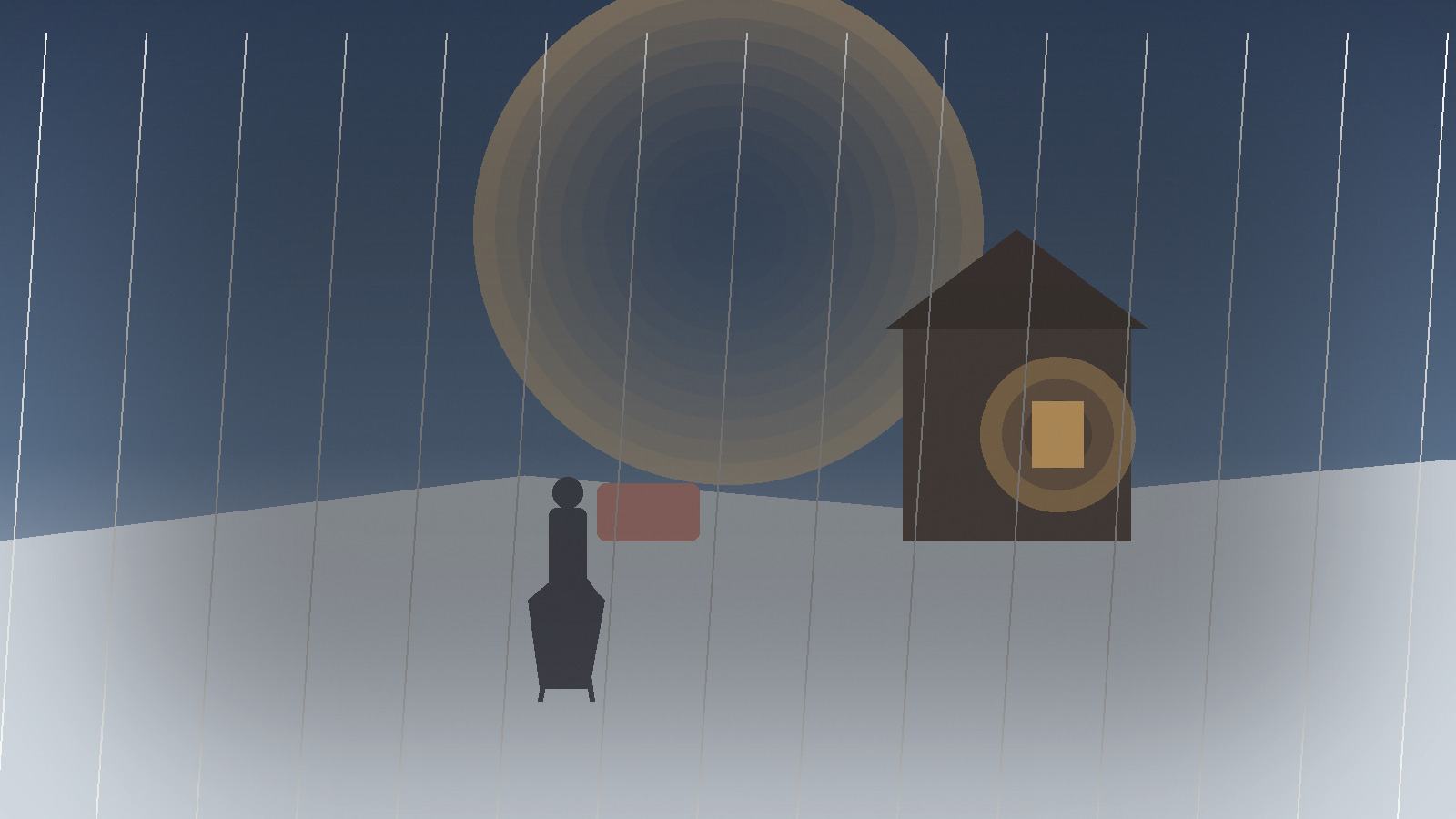
Outside, snow kept falling with the patient confidence of something that knew it would outlast every plan she made.
Nora was in the attic because grief had a talent for hiding work in the worst possible corners. There were old holiday tins, a broken lamp, three suitcases with stubborn clasps, and the cedar trunk her grandmother had once called “the drawer for what life forgets.”
Inside the trunk, beneath embroidered linens and a tarnished music box, was a narrow bundle of envelopes tied with faded blue ribbon.
Nora almost put them aside unopened. Then she saw the handwriting.
Owen Hart.
Her breath stalled.
Not just one envelope. Seven.
All addressed to him in the careful slanted script she remembered from grocery lists pinned to the kitchen wall and birthday cards signed with too many hearts. Her grandmother’s hand.
And beneath those, another envelope.
Nora Bell.
Written in the same ink.
She sat down hard on the attic floorboards, dust rising around her. For a long moment she only looked at her own name as if it might explain itself if she stared long enough.
The date in the corner was December 22, fifteen years ago.
Two days before Nora had left Briar Glen in a borrowed car and a fury she had mistaken for courage.
She opened the letter with suddenly clumsy fingers.
My darling girl,
If you are reading this, I have failed at either timing or meddling, and perhaps at both. I can live with that.
There are truths people postpone until postponing becomes a habit so deep it looks like character. I have let you believe one of those truths was simple when it was not.
Owen never left you for London because he changed his mind. He left because I asked him to.
Nora stopped reading.
The attic tilted.
No. Not tilted. Time had simply gone traitor.
Below her, somewhere in the kitchen, the old boiler clicked like a throat clearing. Snow hissed softly at the window. Nora read the line again and hated herself for how quickly memory obeyed.
Fifteen years ago she had been nineteen and stupid in the pure way only the young can manage—stupid enough to think first love made promises sturdy, stupid enough to think betrayal would at least arrive with dignity.
Owen had been twenty-one then, restless and gentle and too serious when he smiled. They had planned impossible things in practical detail: a flat in Leeds, her art classes, his apprenticeship with the surveyor, a kettle they would buy secondhand and swear was temporary until it became part of the family. Then, three days before Christmas, he had met her by the river and told her he was leaving for London instead.
No fight. No explanation worth naming. Only, “It’s better this way, Nora.”
She had slapped him. He had let her. Then she had packed a bag and left Briar Glen before anybody could watch her become the sort of woman abandoned in public.
Now her grandmother’s letter shook in her hands.
I told him you had more talent than this town would let you keep. I told him if he loved you, truly loved you, he would not ask you to build your life around a boy who feared disappointing his father. I told him one of you had to leave first or neither of you ever would.
He argued with me. More than once. Which is, in fairness, how I knew he loved you.
I thought I was helping. God save us from women who think they can improve destiny with a teacup and a firm opinion.
If I judged wrongly, forgive me. If I judged rightly, forgive me anyway.
Nora closed her eyes.
For fifteen years she had arranged the story one way because one way was survivable. He left. She adapted. The wound became architecture.
Now the walls had moved.
She untied the blue ribbon and opened one of the envelopes addressed to Owen. The letter inside was never stamped.
Mr. Hart,
If you have any decency, you will burn this note after reading it.
That at least sounded like Gran.
I know what you intend. I also know my granddaughter, and she will love you so faithfully she will call it happiness even while she grows smaller around it. Briar Glen is built to keep good women useful and nearby. It has swallowed three generations of us already.
If you care for her, go. Let her hate you if she must. Hatred travels farther than devotion.
Nora laughed once—a stunned, joyless sound. “You unbelievable woman.”
The attic gave no answer. Her grandmother had been dead six weeks and was still successfully interfering with the living.
Nora read the other letters. Some were sterner. Some almost apologetic. None had been mailed.
That fact lodged under her ribs.
If Gran had never sent them, then how had Owen known? Had she spoken to him? Cornered him after Sunday mass? Threatened him with the sort of flinty tenderness older women wield better than priests? Nora could picture it too easily.
At dusk she took the letters downstairs and read them again by the kitchen window while snow gathered along the stone wall outside. The last light made everything look older and kinder than it was.
At seven, there was a knock at the back door.
Nora startled so hard she nearly dropped the stack.
She opened the door to find Mrs. Fenwick from next door balancing a casserole dish under one arm and gossip under the other.
“I made too much shepherd’s pie,” she said. “And before you object, let me remind you I’m older and therefore impossible.”
“Come in.”
Mrs. Fenwick stamped snow from her boots and peered at Nora’s face with the blunt concern of women who had known her since she had gaps in her front teeth. “You look dreadful. Progress?”
“Depends how one defines progress.”
“That bad?”
Nora held up a letter.
Mrs. Fenwick squinted. “Well. That looks like Edith’s writing.” She set down the casserole. “Should I put the kettle on or call a priest?”
“Tea first. Exorcism later.”
Ten minutes later they sat at the scarred kitchen table while Nora explained, haltingly, and Mrs. Fenwick listened without interruption except to mutter “bloody hell” at appropriate intervals.
When Nora finished, the older woman blew across her tea. “That sounds like Edith,” she said at last.
“You say that like it’s normal.”
“It wasn’t normal. It was just her.”
Nora looked at the letters again. “Do you know if she ever spoke to him?”
Mrs. Fenwick hesitated.
There it was: the tiny pause people make when truth is deciding whether to put on its coat.
“Nell.” Nora had not used the woman’s first name in years. “Please.”
Mrs. Fenwick sighed. “I saw them once. At the bus stop, the week before Christmas. Your gran and Owen. He looked as if he’d swallowed nails.”
Nora went very still.
“She was giving him what-for,” Mrs. Fenwick continued. “Couldn’t hear the words. Didn’t need to. Edith could dismantle a man from across a street.”
“Why didn’t anyone tell me?”
“Because your grandmother had a talent for making bad ideas sound like moral duty.” Mrs. Fenwick set down her cup. “And because after you left, Owen told everyone to leave it alone.”
Nora laughed again, bitter this time. “How noble of him.”
“Maybe. Maybe cowardly. Usually it’s both.”
After Mrs. Fenwick left, the house deepened around the silence. Nora stood at the sink looking out at the dark yard. Snow had softened the fence posts and buried the herb bed her grandmother once defended like a kingdom.
She should have thrown the letters back in the box.
She should have taken them as family debris and let history choke on its own dust.
Instead she put on her coat.
Owen still lived in Briar Glen. Mrs. Fenwick had said so two days earlier in the same tone people used to report weather or scandal. Runs the repair shop now. Never married. Bit too handsome for forty, which is frankly rude.
Nora had laughed then and changed the subject.
Now she walked to the village square through six inches of fresh snow and the kind of cold that made every thought ring too clearly. The streetlamps turned the flakes to gold sparks. The bakery windows were dark, the pub loud, the churchyard full of white shoulders.
The repair shop sat beside the post office with its front shutter down and a stripe of light at the back.
Nora stood outside long enough to become ridiculous.
Then she knocked.
Footsteps. A bolt drawn back. The door opened.
Time, insulting thing that it was, had touched Owen Hart exactly enough to make him more dangerous. His face was leaner, the softness at the edges gone. There were fine lines at his eyes. His hair was darker with threads of silver at the temples. He wore a navy jumper with grease on one cuff and surprise like a wound freshened open.
“Nora.”
She had imagined this moment fifteen different ways on the walk over. In none of them did his voice sound like that—careful, almost reverent, as if her name still required two hands.
“Hello, Owen.”
For a second neither moved.
Then he stepped back. “You’d better come in before the whole village gets its Christmas entertainment.”
The shop smelled of cold metal, sawdust, and coffee gone too long on a warmer. Broken radios, clocks, and lamps occupied shelves in states of hopeful disassembly. A single heater hummed at the back.
Nora stayed standing. “I found something.”
She handed him the top letter.
Owen looked at the envelope, and every bit of blood left his face.
“Oh,” he said softly.
So. He knew.
“You did get them.”
He glanced up sharply. “No.”
“No?”
“She spoke to me in person.” He rubbed a hand over his mouth. “Your grandmother wrote afterward, I think, because she regretted how she’d done it. But she never sent the letters.”
Nora gripped the back of a chair. “Then why did you leave?”
His eyes held hers. There was no good place to stand inside that question. “Because I believed her.”
A laugh escaped Nora, raw and incredulous. “That I was too good for you?”
“That you would stay for me and hate me later.”
“I would have preferred the opportunity to decide that myself.”
“So would I,” he said, sharper than she expected. Then he seemed to hear himself and exhaled. “Sorry. You’re right.”
Outside, wind swept powdery snow against the door. Nora could hear the post office clock through the wall, ticking away with obscene politeness.
“Why didn’t you tell me?” she asked.
Owen looked at the letter in his hand. “Because I was twenty-one and thought sacrifice automatically became virtue if it hurt enough.”
“That is profoundly irritating.”
“I know.” A brief, helpless smile touched his mouth. “I’ve had years to study the problem.”
Nora hated the smile for still working.
“Did you love me?” she asked. There. Ugly, direct, impossible to call back.
He did not flinch. “Yes.”
“Then?”
“Then your grandmother told me loving you was not the same as deserving the life you wanted.”
Nora stared at him. “And you just accepted that?”
“No.” He set the letter down with careful hands. “I argued. For three days, as it happens. Then my father had his stroke, and the apprenticeship in London disappeared, and suddenly everything she said sounded practical instead of cruel. You had art school offers. I had a repair bench and a man who could no longer hold a teacup steady. I thought if I asked you to stay, I’d be choosing for you. So I chose for both of us like an idiot.”
The room seemed very quiet.
Nora had known about the stroke. Everyone had. But memory, once organized around injury, was a bad archivist. It kept the parts that justified the pain and misplaced the rest.
“My God,” she said at last. “We were stupid.”
Owen laughed once, not because it was funny. “Criminally.”
She should have left then. Said something clean and devastating, perhaps. Returned home righteous. Instead she asked, “Why didn’t you ever marry?”
His expression changed very slightly, enough to make the heater sound suddenly loud. “Because unfortunately I’m consistent.”
Nora looked away first.
He moved toward the kettle in the back room. “Tea?”
“That seems offensively normal.”
“It’s the only skill I currently trust myself with.”
She almost said no. Instead she took off her gloves.
They sat at the narrow worktable while the storm thickened outside. There was no graceful way back into each other, so they did not attempt grace. They did the slower thing and told the truth in pieces.
Nora spoke about Leeds, then Manchester, then the gallery work that paid badly but let her keep paint under her nails. She confessed she had come back only to settle the house and had no intention of staying.
Owen told her about the shop, his father’s death three bittersweets earlier, his mother’s move to the coast, the years measured in repairs because broken things at least had the decency to admit what was wrong.
And in between those facts lived the other conversation, the one made entirely of absences.
At some point Nora took out the letter addressed to her.
“Do you want to hear the rest?” she asked.
Owen hesitated. “Do I need armor?”
“Probably.”
She read aloud from the kitchen-table confession. Her grandmother’s remorse. Her stubborn belief that love could be rearranged like furniture. Her admission that Owen had come back twice after that first conversation, each time intending to tell Nora everything, each time talked out of it by Edith Bell and his own fear.
At the end of the letter was one final line.
If life has not made me a fool already, then let this finish the job: some loves do not weaken with time; they harden into tools. I pray yours has not become a weapon.
Silence followed.
Owen looked at the floor. “That sounds like her.”
Nora folded the letter carefully. “It does.”
He lifted his eyes. “Have you been happy?”
The question was so gentle it nearly undid her. “Sometimes,” she said. “Truly. I had good years.”
“Good.” He nodded once, but the word hurt him anyway.
“And you?”
“Sometimes.”
They let that stand.
When Nora finally rose to leave, the snow had deepened enough to erase the street entirely. Owen glanced outside and said, “You can’t walk back in this.”
“I walked here in it.”
“Yes, and that was already a poor decision.” He reached for his coat. “I’ll take you.”
They walked side by side through the white hush of the village. The storm had swallowed all sharp sounds. Even the pub had gone quiet behind its fogged windows. Nora could hear only their boots and her own pulse behaving badly.
At her grandmother’s gate, Owen stopped.
Snow clung to his shoulders. The porch light made him look younger and more tired at once.
“Nora.”
She turned.
“I don’t know what to do with tonight,” he said.
That made two of them.
She looked at the house behind her, then at the man in front of her, then at the years laid waste between. There was no sentence large enough to bridge all of it.
So she chose a smaller one.
“Come by tomorrow,” she said. “There are more boxes in the attic, and apparently my family specialized in reckless concealment.”
His mouth lifted in slow disbelief. “You’re asking me to help with storage?”
“I’m giving fate one last chance to behave better.”
Owen laughed, soft and astonished, and some old locked room in her chest remembered how to open.
The next morning he arrived with coffee and bread from the bakery. They worked through trunks and drawers, finding old receipts, photographs, her grandfather’s watch chain, three recipe books with arguments in the margins, and no further catastrophic revelations. At noon they were in the attic sorting old blankets when Nora sneezed at a burst of dust and Owen, without thinking, said, “Still allergic to honest work, then?”
The words landed before either of them could prepare.
It had been his line, once. Teasing her over summer jobs in fields she despised. A thousand ordinary afternoons ago.
Owen went still.
Nora did too.
“I remember saying that,” he whispered.
Hope was a dangerous animal. Nora had spent years starving it into obedience. Now it lifted its head.
“Do you?”
He looked at her as if the attic had changed shape around them. “You were on your grandmother’s back step. Seventeen, maybe. Covered in peach paint. Furious because you’d spilled a whole tin over your shoe.”
Nora laughed, sudden and helpless. “I loved those shoes.”
“You did.” He stared at her, wonder and bittersweet tangling in equal measure. “I’d forgotten that day existed.”
But it existed now. A sliver returned. Not enough to mend everything. Enough to prove the ruin was not total.
That evening they ate leftover shepherd’s pie at the kitchen table while snow thawed from the eaves in thin silver lines. They spoke more easily than the night before, though both of them handled that ease like glass. There were still fifteen years to account for. Still anger. Still the absurd fact that two young fools and one meddling old woman had managed to derail a life large enough to contain them both.
But after dinner, when Owen stood to leave, Nora walked him to the door and did not open it right away.
“I’m going back to Manchester after New Year’s,” she said.
He nodded once. “All right.”
“I haven’t decided what that means.”
Another nod, smaller this time.
Nora looked at him. Really looked. At the patience hard-earned into his face. At the regret he did not perform because it had become part of the structure. At the man he had been, somehow still visible inside the man he was.
“We can’t get the years back,” she said.
“No.”
“But I’m no longer interested in letting them keep the rest.”
Something fierce and careful moved through his expression.
“Nora,” he said, and the way he said her name this time was not reverent. It was alive.
She kissed him before she could decide whether it was wise.
Wisdom, to be fair, had an embarrassing record in this family.
His hand came to her face with such startling gentleness that for one bright second she hated every year they had lost. Then hatred gave way to something warmer and less theatrical. Relief, maybe. Or recognition finally getting its paperwork in order.
When they drew apart, snowlight filled the doorway behind him.
Owen rested his forehead lightly against hers. “Tomorrow,” he said, a question disguised as a promise.
“Tomorrow,” Nora answered.
After he left, she stood in the quiet hall with her grandmother’s final letter still folded in her pocket. The house no longer felt like a mausoleum. It felt like a witness with terrible methods and, perhaps, one last useful trick.
Outside, the storm had begun to clear.
By morning the whole village would shine clean and dangerous under fresh light.
Nora thought that was as good a time as any to begin again.











 Prev Post